
What Should Have Happened?
What care was required under the circumstances?
Medical Malpractice
Medical malpractice cases are different from ordinary personal injury cases.
The medicine can be complicated. The records may contain thousands of pages. Several doctors, nurses, hospitals, specialists, or other health care providers may have participated in a patient’s care.
The central question is whether the care fell below the applicable standard of care, and whether that failure caused or contributed to a serious injury or death. From our Bristol office, Large & Associates investigates those questions for families across East Tennessee and Southwest Virginia.
Helping Families Find the Truth.
No Fee Unless We Collect for You

Understanding the Claim
A bad medical outcome does not automatically mean malpractice occurred.
Medicine involves risks, complications, and difficult decisions. But when a health care provider fails to recognize important warning signs, delays necessary treatment, misinterprets critical information, or otherwise fails to provide appropriate care, the consequences can be devastating.
A medical malpractice case may involve a physician, surgeon, nurse, hospital, medical group, emergency department, nursing professional, or other health care provider.
These questions can require intensive review of medical records and consultation with qualified medical experts.
What care was required under the circumstances?
What did the records, test results, orders, nursing notes, and other evidence show?
Did the alleged failure cause or contribute to the patient’s injury or death?
Medical Errors & Preventable Injuries
The investigation begins with what happened, what should have happened, and whether the difference changed the outcome.

01
Sometimes the most important problem is not what a provider did. It is what was not recognized soon enough.
A patient may have symptoms, abnormal laboratory results, imaging findings, or other warning signs that should lead to additional testing or treatment.
The investigation looks at what information was available at the time, what should reasonably have been done, and whether an earlier diagnosis could have changed the outcome.
Learn More About Delayed Diagnosis →
02
Hospital care often involves an entire team.
Doctors, nurses, specialists, pharmacists, radiologists, laboratories, and other departments may all participate in the care of one patient. When communication breaks down or important information is missed, serious harm can result.
Determining what happened may require examining multiple providers and reconstructing the patient’s care step by step.
Learn More About Hospital Negligence →03
Every surgery carries risks. A complication does not automatically mean negligence occurred.
The question is whether the care before, during, and after the procedure met the appropriate standard of care.
Sometimes the most important issue is not what happened in the operating room. It is how the medical team responded afterward.
Discuss a Surgical Concern →
04
Medication errors can occur when a drug is prescribed, dispensed, administered, or monitored.
Review may require physician orders, pharmacy records, medication-administration records, laboratory results, and nursing documentation.
Learn More About Medication Errors →
05
With some medical emergencies, time matters enormously.
Symptoms of stroke and heart attack may require rapid evaluation, testing, consultation, and treatment.
In these cases, the timeline can become one of the most important pieces of evidence.
Learn More About Stroke & Heart Attack Cases →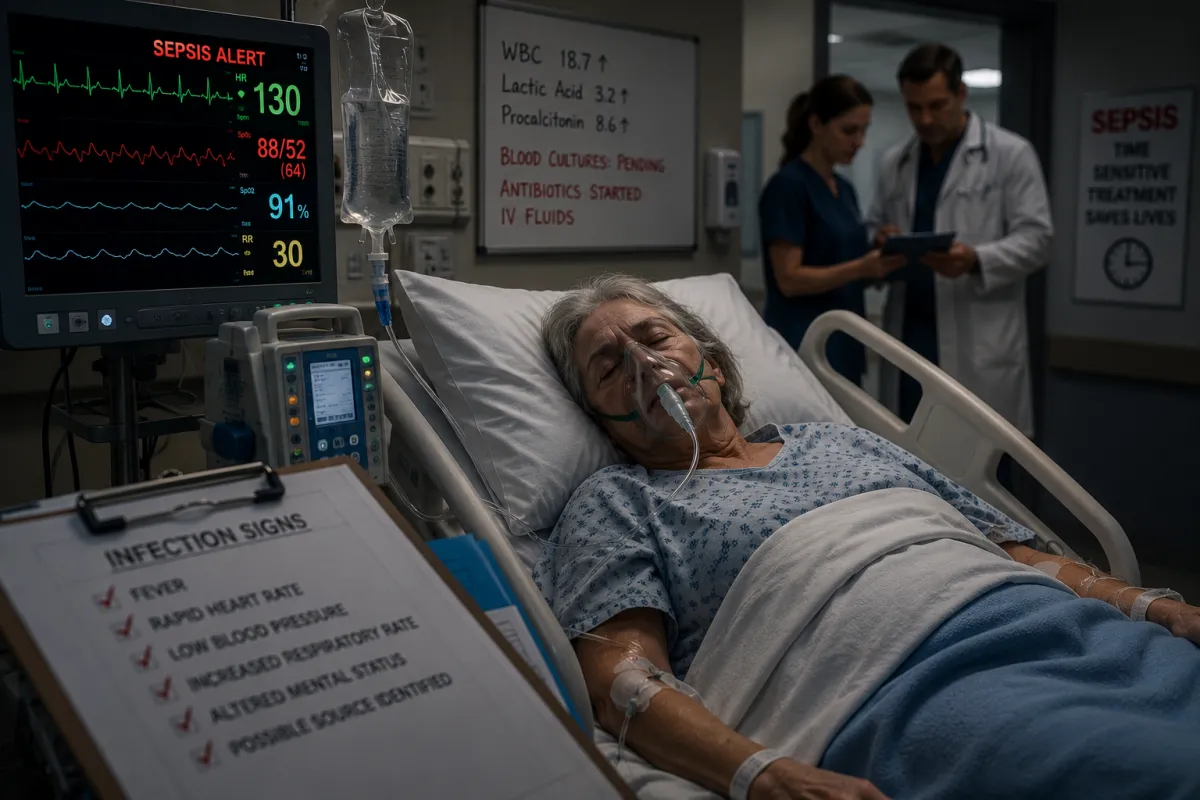
06
Sometimes sepsis is the final event. The important question is what happened before it.
Sepsis can develop when the body’s response to infection becomes life-threatening. The final diagnosis alone may not explain whether something went wrong.
Vital signs, laboratory results, observations, orders, medications, and communications may help reconstruct what happened.
Learn More About Sepsis & Serious Infections →
07
Some complications during pregnancy, labor, and delivery cannot be prevented. Others raise questions about whether warning signs were recognized and timely action was taken.
These cases can involve highly technical medical issues and often require review by qualified medical experts.
Learn More About Birth Injuries →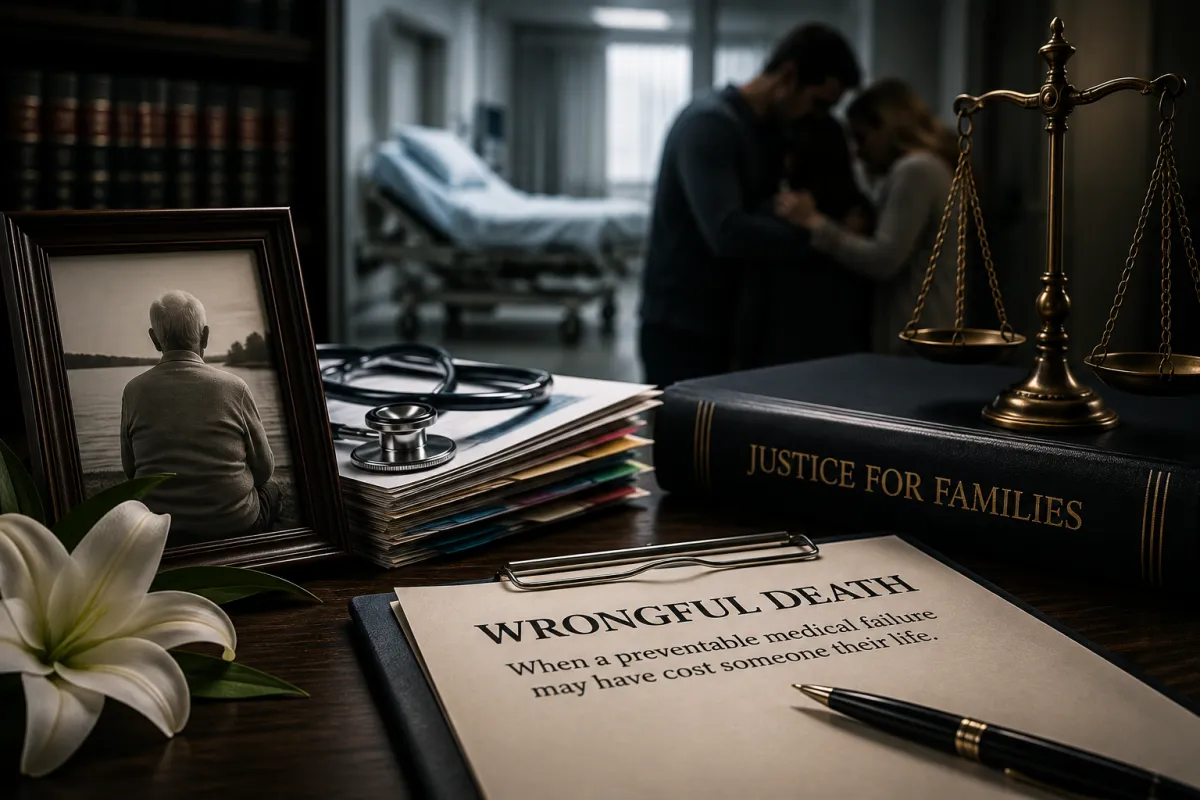
08
When a preventable medical failure may have cost someone their life.
A death by itself does not establish negligence. The investigation asks what happened in the hours, days, or sometimes weeks leading up to the death.
Understanding what happened may require records from multiple providers and a step-by-step reconstruction of care.
Learn More About Medical Wrongful Death →Finding Answers in the Evidence
A careful case begins with the records and follows the evidence step by step.
We obtain and review the records needed to understand the patient’s care.
We reconstruct what happened and when it happened.
We identify the warning signs, decisions, test results, treatments, and failures that may require closer examination.
When appropriate, qualified medical experts help evaluate whether the care met the applicable standard.
We examine whether the alleged failure caused or contributed to the patient’s injury or death.
We help the family understand what the evidence shows and discuss the legal options available.
State-Specific Experience Matters
Medical malpractice cases involve more than medical evidence. Each state has technical rules affecting how and when a claim must be pursued.
Tennessee law contains specific procedural requirements governing health care liability claims. Those requirements can affect how and when a claim must be pursued.
A lawyer can have a medically valid case and still face serious problems if the procedural requirements are not properly followed. That is one reason experience matters in medical malpractice litigation.
Discuss a Tennessee Medical Malpractice Case →Virginia medical malpractice cases combine two highly technical subjects: medicine and law.
The lawyer must understand the records, identify what should have been done differently, determine whether that failure caused the injury, and obtain qualified expert support when required.
Large & Associates represents individuals and families throughout Virginia, including Southwest Virginia.
Discuss a Virginia Medical Malpractice Case →You Do Not Have to Know Whether It Was Malpractice
They do not usually come with a complete medical timeline and an expert opinion.
Something happened. Something does not make sense. They want to know why.
That is enough to start a conversation.Tell us what happened. We can help determine whether the circumstances warrant further investigation.
Free Case Review423-968-4969Request a Free Case ReviewNo Fee Unless We Collect for YouAn unexpected medical outcome, complication, injury, or death does not by itself establish medical malpractice. Every matter depends on its individual facts, applicable law, medical evidence, and standard of care. Information on this website is for general informational purposes only and is not legal or medical advice.
Let’s review the records together.